

Induction Motor Overheating: Causes, Checks and Fixes

Induction motor overheating is one of the most common complaints we hear from people running pumps, compressors, conveyors and machine tools. A hot motor trips the overload relay, stops production and, if ignored, slowly destroys the winding insulation. The good news is that most overheating has a clear cause that you can find with a clamp meter, a multimeter and a careful look at the installation. In this guide we explain how hot is too hot, the common causes of overheating in a 3 phase induction motor, a simple troubleshooting checklist and how to prevent the problem from coming back.
How Hot Is Too Hot for an Induction Motor?
A motor running at full load will feel hot to the touch, and that alone is not a fault. What matters is whether the winding temperature stays within the limit of its insulation class. Common insulation classes are:
Class B: maximum winding temperature of 130°C
Class F: maximum winding temperature of 155°C
Class H: maximum winding temperature of 180°C
A widely used rule of thumb is that every 10°C of operation above the rated limit roughly halves the life of the insulation. So a motor that runs a little too hot every day may not fail this week, but it will fail much earlier than it should. Warning signs include a burning smell, discoloured paint near the terminal box, repeated overload trips and a body temperature that keeps rising instead of settling after an hour or so of running.
8 Common Causes of Induction Motor Overheating
Overloading: the driven machine needs more power than the motor's rated HP. Compare the running current with the full-load current on the nameplate. A motor that runs above its rated current will overheat, even if it does not trip immediately.
Low, high or unbalanced voltage: under-voltage forces the motor to draw more current for the same load, while over-voltage increases core losses. Unbalanced phase voltages are especially harmful, because a small voltage unbalance causes a much larger current unbalance and extra heating in the winding.
Single phasing: if one phase is lost because of a blown fuse, loose connection or contactor fault, the motor keeps trying to run on two phases and the current in the healthy phases rises sharply. Without protection the winding can burn out within minutes.
Poor cooling: a broken fan, a blocked fan cover, or dust and oil caked on the cooling fins stops heat from escaping. TEFC motors depend completely on the shaft-mounted fan and clean fins.
Frequent starting and stopping: starting current is several times the running current. A motor built for continuous (S1) duty that is started many times an hour does not get time to cool between starts.
Bearing problems: worn bearings, too little grease or too much grease all increase friction and heat at the shaft, and a dragging rotor raises the load current.
Wrong connection: a motor designed for delta connection on the supply voltage but wired in star gets reduced voltage per phase. Under load it slows down, draws high current and overheats.
High ambient temperature: motors installed in hot, closed rooms, next to furnaces or in direct sun have less margin before the winding reaches its limit. Ratings are normally based on an ambient temperature of 40°C.
Troubleshooting Checklist for an Overheating 3 Phase Motor
Before you replace or rewind a motor, work through these checks. Always isolate the supply before touching connections or the shaft.
Measure the current in all three phases with a clamp meter while the motor is under normal load, and compare it with the nameplate full-load current.
Measure the voltage between all three phases at the motor terminals. The readings should be close to each other and close to the rated voltage.
Open the terminal box and check that the links are set for the correct star or delta connection and that every terminal is tight and free from burning marks.
Inspect the fan, fan cover and cooling fins. Clean away dust, fibre and oil, and replace a cracked or missing fan.
Uncouple the motor and rotate the shaft by hand. It should turn freely and quietly. Roughness or noise points to the bearings.
Check coupling alignment and belt tension. Misalignment and over-tight belts add load and bearing stress.
Before restarting a motor that has tripped or burned, test the insulation resistance with a megger to make sure the winding is still healthy.
How to Prevent Overheating in the Long Run
Once the root cause is fixed, a few good practices will keep your induction motor running cool for years:
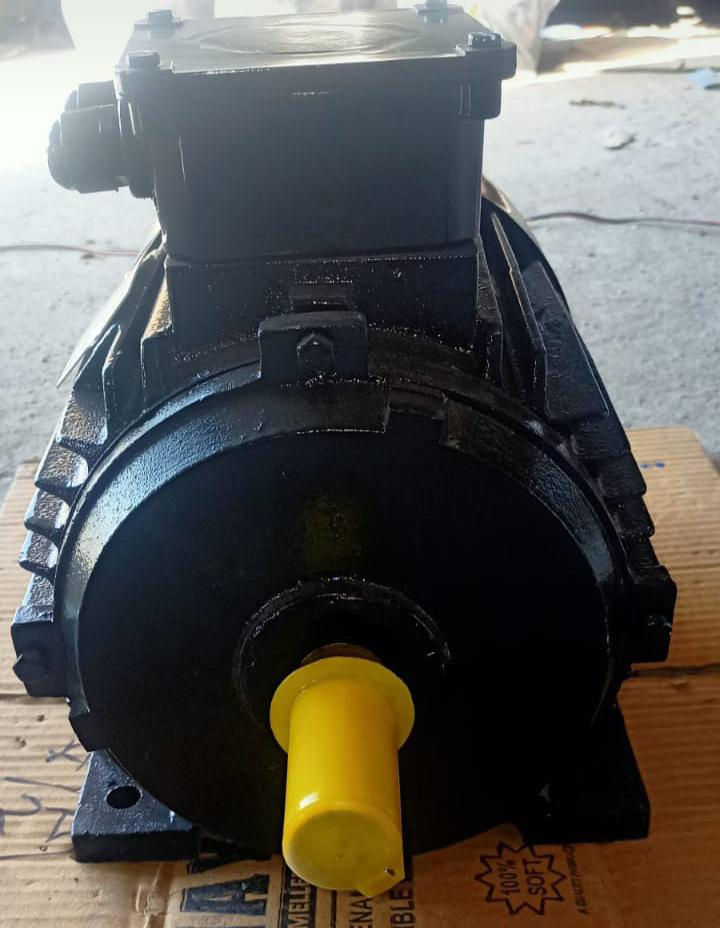
Size the motor correctly: choose the HP and RPM to suit the real load, with a sensible margin. If an old motor is constantly overloaded, replace it with the next size up, for example a 7.5 HP 2 pole 3 phase foot mounted motor in place of a 5 HP unit that is struggling.
Use proper protection: set the overload relay close to the motor's full-load current, and fit a single phasing preventer or a motor protection circuit breaker.
Start larger motors gently: a star-delta starter or soft starter reduces starting current and heating on bigger motors.
Follow a maintenance schedule: clean the motor regularly, grease bearings as recommended, and check current and voltage at fixed intervals so changes are noticed early.
Keep the surroundings ventilated: leave space around the fan cover and avoid installing motors in enclosed, unventilated corners.
Reliable 3 Phase Induction Motors from Unicorn Engineers, Ahmedabad
At Unicorn Engineers we manufacture single phase and 3 phase AC induction motors in Ahmedabad, Gujarat, in foot, flange, face and foot-cum-flange mountings, along with brake motors and crane duty motors. We are an ISO and MSME certified induction motor manufacturer, our motors come with a 1-year warranty, and we deliver across India with support for dealers and OEMs.
If you are replacing a motor that keeps overheating, or want help choosing the right HP and RPM for your application, browse our products or contact us. You can also call our sales team on +91 90337 48932; WhatsApp and phone enquiries are welcome.
Unicorn Engineers, 33, Gopal Charan Estate, Road No-5, Kathwada GIDC, Ahmedabad 382430, Gujarat, India.


Comments