

3 HP 3 Phase Motor for Air Compressors: Buyer's Guide

Air compressors are found in almost every workshop, garage, tyre shop, spray-painting unit and small factory. The motor is the heart of the machine, and a wrongly chosen motor leads to tripping, hard starting, burnt windings and expensive downtime. In this guide we explain how to select a 3 HP 3 phase motor for an air compressor: the right speed, mounting, pulley sizing, starting and protection, so your compressor runs smoothly shift after shift.
Why a 3 HP 3 Phase Motor Suits Small Air Compressors
A 3 HP (about 2.2 kW) motor is a popular choice for single-stage and small two-stage reciprocating compressors used in workshops, service stations and light-industrial units. A 3 phase induction motor is preferred over a single phase motor at this size because:
It draws lower current per phase, so cables and starters can be smaller.
It produces smooth, self-starting torque without a starting capacitor or centrifugal switch, which are common failure points on single phase compressor motors.
It handles the frequent start-stop cycling of a pressure-switch-controlled compressor better.
It generally runs cooler and lasts longer under continuous load.
If your compressor tank and pump manufacturer recommends 3 HP, do not under-size to 2 HP to save cost. An overloaded motor runs hot and its insulation life drops sharply. If the compressor will be upgraded to a larger pump later, consider stepping up to a 5 HP 1440 RPM foot mounted motor from the start.
Choosing Speed: Why 4 Pole 1440 RPM Is the Usual Pick
Most belt-driven reciprocating compressors are designed around a 4 pole motor running at about 1440 RPM on a 50 Hz supply. This speed gives a good balance of torque, motor size and belt speed. Here is how the common speeds compare for compressor duty:
2 pole (about 2880 RPM): compact, but needs a very small motor pulley or a very large compressor pulley to bring pump speed down. Belts slip more and noise is higher. Used mainly on direct-coupled or oil-free designs specified by the compressor maker.
4 pole (about 1440 RPM): the standard choice for belt-driven compressors. Easy pulley ratios, good starting torque and quieter running.
6 pole (about 960 RPM): higher torque per HP but a larger, heavier motor. Used where the pump must run slowly or where low noise is important.
To check pulley sizing, use this simple formula: compressor pump RPM = motor RPM × motor pulley diameter ÷ compressor pulley diameter. For example, a 1440 RPM motor with a 100 mm pulley driving a 300 mm compressor flywheel gives about 480 RPM at the pump. Always keep the pump within the speed range given by its manufacturer, because over-speeding the pump also overloads the motor.
Mounting, Starting and Duty Considerations
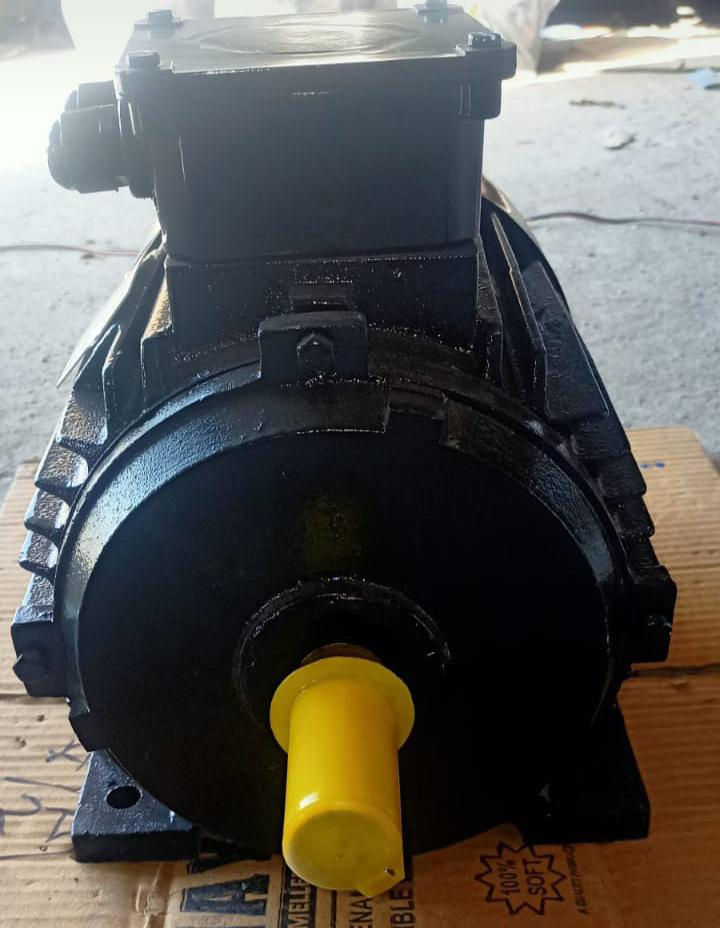
Compressor motors are almost always foot mounted on a sliding base or on the tank platform so that belt tension can be adjusted. Our 3 HP 1440 RPM 4 pole 3 phase foot mounted motor is built for exactly this kind of installation. A few points to plan for:
Starting: at 3 HP, direct-on-line (DOL) starting is normal. Make sure the compressor has a working unloader valve so the motor starts against low pressure. A stuck unloader forces the motor to start against full tank pressure, which causes heavy current, tripping and overheating.
Starts per hour: a pressure switch starts and stops the motor many times a day. If the motor cycles too often, the receiver tank may be too small or there may be an air leak. Fewer, longer runs are kinder to the motor.
Ventilation: compressors produce heat, and many are installed in closed corners. Keep at least a hand-span of free space behind the motor fan cowl and keep the cooling fins free of oil mist and dust.
Supply voltage: Indian 3 phase supply is nominally 415 V. Low voltage at the end of long cables is a common cause of high current and hot windings, so size the cable for the run length.
Protection and Maintenance Tips for Compressor Motors
A compressor motor works in a hot, oily and vibrating environment, so a little care goes a long way:
Use a correctly set overload relay matched to the full-load current on the motor nameplate, not a random higher value.
Fit a single phasing preventer. Losing one phase while the compressor is loaded is one of the fastest ways to burn a 3 phase motor.
Check belt alignment and tension monthly. Over-tight belts overload the motor bearings; loose belts slip, squeal and waste power.
Keep the motor and pump pulleys in line using a straight edge after any maintenance.
Listen for bearing noise and check for vibration. Grease or replace bearings as per the maintenance schedule.
Measure insulation resistance with a megger once or twice a year, especially in humid or monsoon conditions.
If your compressor motor is tripping or running hot, read our guide on induction motor overheating causes and fixes for a step-by-step checklist. For lighter duty compressors used occasionally, a 2 HP 1440 RPM foot mounted motor may also be enough; confirm with the compressor pump rating.
Buy Compressor Motors from Unicorn Engineers, Ahmedabad
We are an induction motor manufacturer in Ahmedabad, Gujarat, making single phase and 3 phase AC induction motors in foot, flange, face and foot-cum-flange mountings, along with brake motors and crane duty motors. Our motors are made at our works in Kathwada GIDC and supplied across India to compressor builders, OEMs, dealers and end users.
ISO and MSME certified manufacturing unit
1-year warranty on our motors
All-India delivery and dealer support
2, 4, 6 and 8 pole options across a wide HP range
Looking for a 3 HP 3 phase motor for your air compressor, or a bulk order for your compressor assembly line? Browse our full range of induction motors or send us an enquiry. You can also call or WhatsApp our sales team on +91 90337 48932 — phone and WhatsApp enquiries are welcome.
Unicorn Engineers, 33, Gopal Charan Estate, Road No-5, Kathwada GIDC, Ahmedabad 382430, Gujarat, India.


Comments