

10 HP 3 Phase Motor for Flour Mill (Atta Chakki): Buyer's Guide

A flour mill or atta chakki runs for long hours under a steady, heavy load. If the motor is undersized, it overheats and trips; if it is oversized, you pay for power you never use. For most small commercial chakkis and many village and shop-level mills, a 10 HP 3 phase motor is the workhorse. In this guide we explain how to choose the right 10 HP 3 phase induction motor for a flour mill, which speed and mounting to pick, how to start it safely, and how to keep it running for years.
Why a 10 HP 3 Phase Induction Motor Suits Flour Mills
A stone or emery chakki needs high starting torque to get the heavy grinding stones moving, followed by constant torque for hours of continuous grinding. A squirrel cage 3 phase induction motor is ideal for this kind of duty because it is simple, rugged and has no brushes or commutator to wear out.
Power: 10 HP is about 7.5 kW, a common rating for medium-size commercial chakkis and multi-purpose grinding units.
Duty: flour mill motors normally work on continuous S1 duty, so the motor must be rated to run at full load for long periods without overheating.
Supply: a 415 V, 50 Hz, 3 phase supply is standard for this size in India. Full-load current at 415 V is typically in the range of 14 to 15 A, but always check the nameplate of the actual motor.
Robustness: a totally enclosed fan cooled (TEFC) body helps keep flour dust out of the windings and bearings.
If your mill is smaller, a 5 HP or 7.5 HP motor may be enough; larger pulverisers and multi-stone setups may need 15 HP or 20 HP. Always match the motor to the mill maker's recommended power rather than guessing.
Choosing the Right RPM: 4 Pole 1440 RPM vs 2 Pole 2880 RPM
Most belt-driven atta chakkis are paired with a 4 pole motor running at about 1440 RPM. This speed gives a good balance of torque and smooth running, and the belt and pulley ratio is used to bring the stone to the speed the chakki maker recommends.
4 pole, 1440 RPM: the most common choice for stone chakkis and general flour mills. Good torque, lower noise and longer bearing life.
2 pole, 2880 RPM: used for high-speed pulverisers, masala grinders and hammer mills where the machine itself is designed for high speed.
6 pole, 960 RPM: useful where a slower speed is needed with less pulley reduction, at the cost of a larger frame for the same HP.
To work out your pulleys, use this simple relation: machine speed = motor RPM x (motor pulley diameter / machine pulley diameter). For example, a 1440 RPM motor with a 4 inch pulley driving a 12 inch pulley gives a machine speed of about 480 RPM. Use correctly tensioned V-belts and keep the pulleys properly aligned to avoid extra load on the motor bearings.
Mounting, Starting and Protection
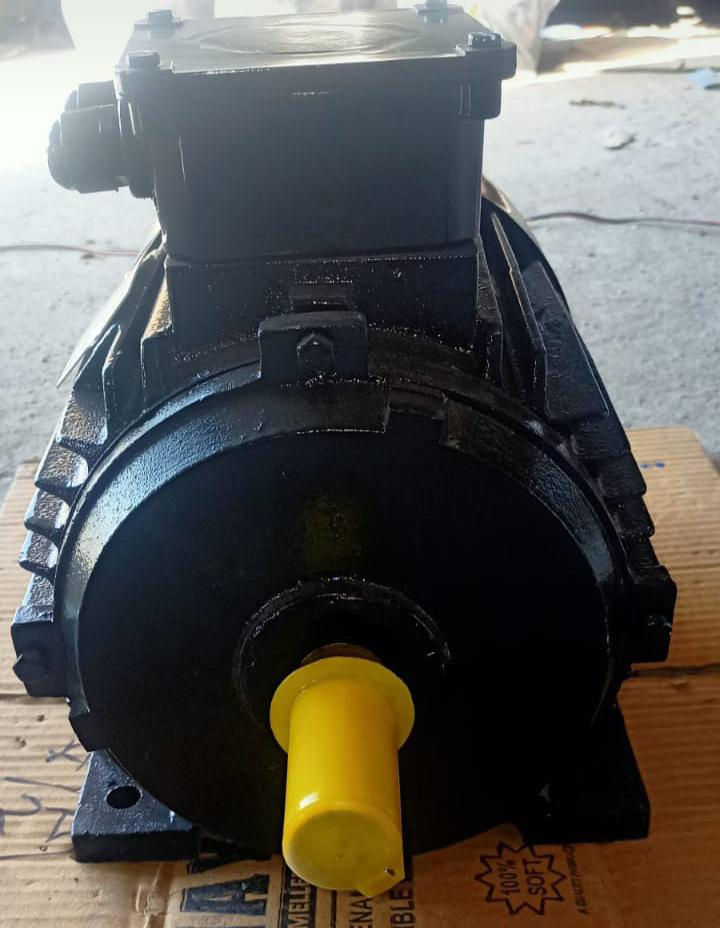
For a flour mill, a foot mounted motor on a rigid base frame is the usual arrangement, because it makes belt tensioning easy with a sliding rail or adjustable base. Flange mounting is preferred only when the motor is coupled directly to the machine body. We manufacture foot, flange, face and foot-cum-flange mounted motors, so you can match the motor to your machine layout.
Starting method matters at 10 HP. A direct-on-line (DOL) start draws a high inrush current, so many installations of this size use a star-delta starter to reduce the starting current. Check the rules of your local electricity board and your machine supplier's advice before choosing a starter.
Use a correctly rated starter with an overload relay set to the motor's nameplate full-load current.
Fit single phasing protection. Losing one phase while the stones are loaded is one of the most common causes of burnt windings in flour mills.
Use cables of the right size for the current and the cable length, and make sure the motor body is properly earthed.
Provide a stable supply voltage; frequent low voltage makes the motor draw more current and run hotter.
Maintenance Tips for Long Motor Life in Flour Mills
Flour dust is the main enemy of a chakki motor. It clogs the cooling fins and fan cover, which raises the winding temperature. A few simple habits go a long way:
Clean the fan cover and cooling fins regularly so air can flow freely over the body.
Check belt tension and pulley alignment; an over-tight belt overloads the drive-end bearing.
Lubricate or replace bearings as per the maintenance schedule and listen for unusual noise or vibration.
Do not overload the mill by feeding grain faster than the stones can grind. Watch the current with a clamp meter if the motor feels unusually hot.
Keep the terminal box closed and sealed to keep dust and moisture away from the connections.
Buy a 10 HP Flour Mill Motor from Unicorn Engineers
Unicorn Engineers is an induction motor manufacturer in Ahmedabad, Gujarat, making single phase and 3 phase AC induction motors in foot, flange, face and foot-cum-flange mountings, along with brake motors and crane duty motors. We are ISO and MSME certified, our motors come with a 1-year warranty, and we offer all-India delivery and dealer support.
For a typical atta chakki, have a look at our 10 HP 1440 RPM 3 phase foot mounted motor. You can also browse the full range of motors and gearboxes on our products page.
Need help choosing the right motor for your flour mill, or looking for bulk supply as a dealer or machine builder? Call our sales team on +91 90337 48932 – phone and WhatsApp enquiries are welcome – or send us your requirement through our contact page. You are also welcome to visit us at 33, Gopal Charan Estate, Road No-5, Kathwada GIDC, Ahmedabad 382430.


Comments